Introduction
Face swap video technology has rapidly transitioned from a playful novelty to a powerful tool with real creative, commercial, and cultural implications. Once, swapping faces in videos required complex editing software and hours of manual work by skilled editors. Today, AI-powered models have democratized the process, allowing anyone — from hobbyists to large brands — to create seamless face swaps in minutes.
As the capabilities of AI video editing grow, so do the opportunities and challenges. From film production and social media entertainment to personalized marketing and digital identity exploration, face swap technology is reshaping how we think about video creation. Yet with this power comes ethical considerations around consent, deepfakes, misuse, and authenticity.
In this blog, we’ll explore the creative use cases for face swap video technology, delve into the ethical questions it raises, and look at what the future holds for this rapidly evolving field. We’ll also highlight five of the best tools available today for creating face swap videos — beginning with invideo and continuing with other powerful platforms. Each tool is presented in a consistent format so you can easily compare and evaluate them.
What Is Face Swap Video Technology?
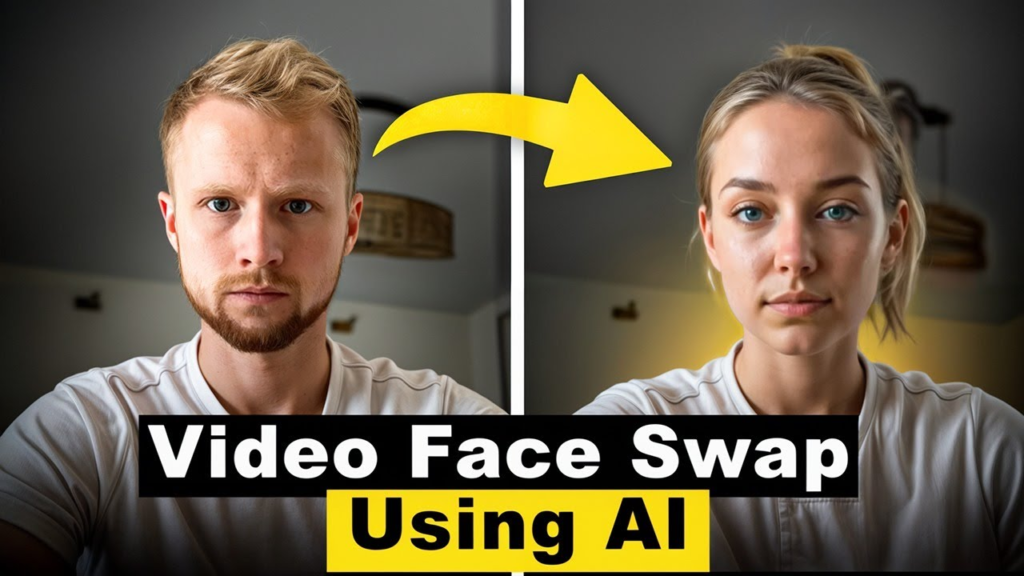
A face swap video is a video where one person’s face is replaced with another’s using artificial intelligence and machine learning. Historically, this process was done manually using advanced compositing techniques. Now, AI has automated the task, making it possible to map facial features from one person onto another with realistic animation, synchronized expressions, and motion continuity.
Modern face swap systems analyze facial geometry, expressions, lighting, and motion to create convincing results. Sometimes also referred to as ai generated video transformation, this technology blurs the lines between what is captured on camera and what can be created or modified after the fact.
Face swap videos are created by feeding a source video and a reference face into an algorithm that then reconstructs the video frames with the new face. The output can be surprisingly realistic if done well — but it’s also only as good as the model’s understanding of facial dynamics and motion.
The Rise of AI Editing and Face Swap Content
The broader category of AI video editing has grown exponentially with the advancement of neural networks and generative AI models. Tools that once required weeks of training and expensive software are now accessible to anyone with a computer or smartphone.
This rise has several implications:
- Content democratization: More creators can experiment with cinematic effects, deep editing, and personalized visuals.
- Faster workflows: Projects that once took hours or days can be completed in minutes.
- New creative genres: Face swap video has enabled novel forms of entertainment, storytelling, and personalization.
- Ethical questions: As tools become accessible, misuse and deepfake concerns grow.
AI editing isn’t just about swapping faces — it includes automatic scene editing, automated voice and sound design, motion tracking, and visual synthesis. Face swap technology sits at the intersection of these capabilities and is one of the most visible examples of how AI is changing content creation.
Creative Use Cases for Face Swap Video
1. Social Media Entertainment and Engagement
One of the earliest and most popular use cases for face swap videos is entertainment on social platforms. Creators use face swapping to:
- Place themselves into movie scenes or music videos
- Reimagine iconic historical moments featuring friends or followers
- Create humorous or parody content
- Participate in viral social media challenges
These videos drive engagement because they capture attention, spark curiosity, and are easily shareable across platforms like TikTok, Instagram, and YouTube Shorts.
2. Personalized Marketing and Storytelling
Brands are experimenting with face swap technology to deliver personalized experiences at scale. For example:
- Personalized ads where the viewer’s face appears in a brand story
- Customized greetings or promotional messages from virtual brand ambassadors
- Interactive campaigns that blend user identity with product narratives
By enabling deeper personalization, face swap content can make marketing messages more memorable and emotionally resonant.
3. Film and Video Production
In professional settings, face swap technology can assist with visual effects, stunt doubles, and historical recreations. Examples include:
- Replacing stunt performers’ faces with the actor’s likeness
- Recreating historical figures for documentaries or narrative films
- De-aging or aging actors for certain scenes
While traditional VFX still plays a major role, AI-assisted face swapping can significantly accelerate rough edits and concept visualizations before full production.
4. Gaming and Virtual Avatars
Face swap video technology overlaps with virtual avatar creation by enabling users to map their facial features onto in-game characters or animated profiles. This intersection enriches the gaming and metaverse experience, making avatars feel more personal and expressive.
5. Education and Training
Educational videos can benefit from integrating face swap technology for enhanced engagement. For example:
- History lessons where students see themselves as historical figures
- Language learning videos with personalized narrators
- Corporate training modules featuring instructors with custom appearances
These approaches make educational content more interactive and relatable.
Ethical Considerations and Risks
While face swap video technology offers many creative opportunities, it also raises important ethical questions.
Consent and Identity
Swapping someone’s face into a video without consent violates privacy and personal rights. This risk is especially high when technology is used for impersonation, deepfakes, or misrepresentation.
Deepfake Misuse
Deepfake videos — realistic videos generated without the subject’s involvement — can be used maliciously for misinformation, reputation damage, fraud, or manipulation. As face swap tools become more accessible, the potential for misuse increases, highlighting the need for guidelines and safeguards.
Context and Transparency
Creators have a responsibility to be transparent if a video has been altered using face swap technologies, especially in contexts like journalism, education, or public messaging. Misleading audiences erodes trust and can have serious consequences.
Regulation and Responsibility
As regulations around AI content evolve, creators and platforms will need to comply with legal frameworks that address consent, copyright, identity rights, and digital manipulation. Adhering to ethical standards will be essential to protecting both creators and audiences.
5 Best Face Swap Video Maker Tools
Below are five powerful tools that help creators generate face swap videos, each explained in a consistent format.
1. Invideo
Invideo offers an intuitive, AI-assisted platform for creating face swap videos quickly and efficiently. Users can upload source footage and reference images, and the platform’s AI handles the complex task of integrating new facial appearances into existing motion sequences. Invideo also integrates animation, transitions, and refined pacing that helps the final output feel cohesive and polished. Apart from face swapping, invideo’s ecosystem supports broader video editing workflows, allowing creators to add narration, motion captions, and sound design. Invideo stands out for its ease of use, making advanced face swap video creation accessible even to marketers and creators with limited editing experience. By leveraging AI editing capabilities, brands can produce engaging, shareable content that blends storytelling with visual innovation, saving time compared to traditional production methods.
2. DeepFaceLab
DeepFaceLab is a robust face swap video tool that provides granular control for users who want more fine-tuned results. While it requires a steeper learning curve than some cloud-based tools, its power lies in allowing creators to adjust model training, facial alignment, and rendering parameters. Users can achieve highly realistic results when they invest time in understanding the workflow. DeepFaceLab is popular among independent creators and tech hobbyists seeking advanced control over every aspect of the face swap process.
3. Reface
Reface is a mobile-friendly face swap video maker that has gained popularity for its simplicity and speed. Users can swap faces into famous movie scenes, GIFs, or short video clips using a smartphone interface. The tool prioritizes fast processing and immediate results, making it ideal for social content and light-hearted creative expression. While Reface may not offer the same depth of customization as desktop tools, its user-friendly experience makes it a go-to for on-the-go content creation.
4. Avatarify
Avatarify is an AI tool focused on real-time face swapping during video calls or streaming. By mapping a user’s expressions onto animated characters or other faces, Avatarify enables dynamic, interactive face swap experiences. It’s particularly useful for live content, virtual presentations, and interactive social media sessions where real-time expression mapping adds an engaging layer to communication.
5. Wondershare Filmora (AI Face Swap)
Wondershare Filmora’s AI face swap feature integrates into a broader video editing suite that supports motion tracking, effects, transitions, and audio design. Users can drop face swap elements into their projects while retaining access to Filmora’s wider editing toolkit. This makes it useful for creators who want an all-in-one editing environment that supports face swap alongside general video production needs.
The Future of AI Editing and Face Swap Technology
The direction of face swap and AI editing technologies is likely to evolve in several exciting ways:
Improved Realism
As generative models become more advanced, face swap results will continue to become more seamless and difficult to distinguish from native footage.
Enhanced Automation
Future tools will likely further automate matching lighting, motion blur, and context-sensitive adjustments to ensure face swaps are even more convincing without manual tweaking.
Integration With Live Content
Live face swapping during streams, video calls, and hybrid content formats will become more common, opening new frontiers in interactive media.
Responsible AI Standards
Alongside technical progress, there will be increased emphasis on ethical standards, watermarking, and content authentication to prevent misuse and maintain trust.
Conclusion
Face swap video technology is quickly moving from novelty to mainstream toolset. By removing technical barriers and accelerating content creation, these tools empower creators and brands to experiment, engage audiences, and expand their creative output. However, as this technology becomes more powerful and more accessible, it carries real ethical responsibilities around consent, authenticity, and content integrity.
Whether you’re leveraging face swap for entertainment, marketing, education, or storytelling, understanding both its potential and its limitations is key. With thoughtful application and respect for ethical standards, face swap video technology will continue to play a significant role in how digital content evolves in the years ahead.